
Last updated November 20, 2026
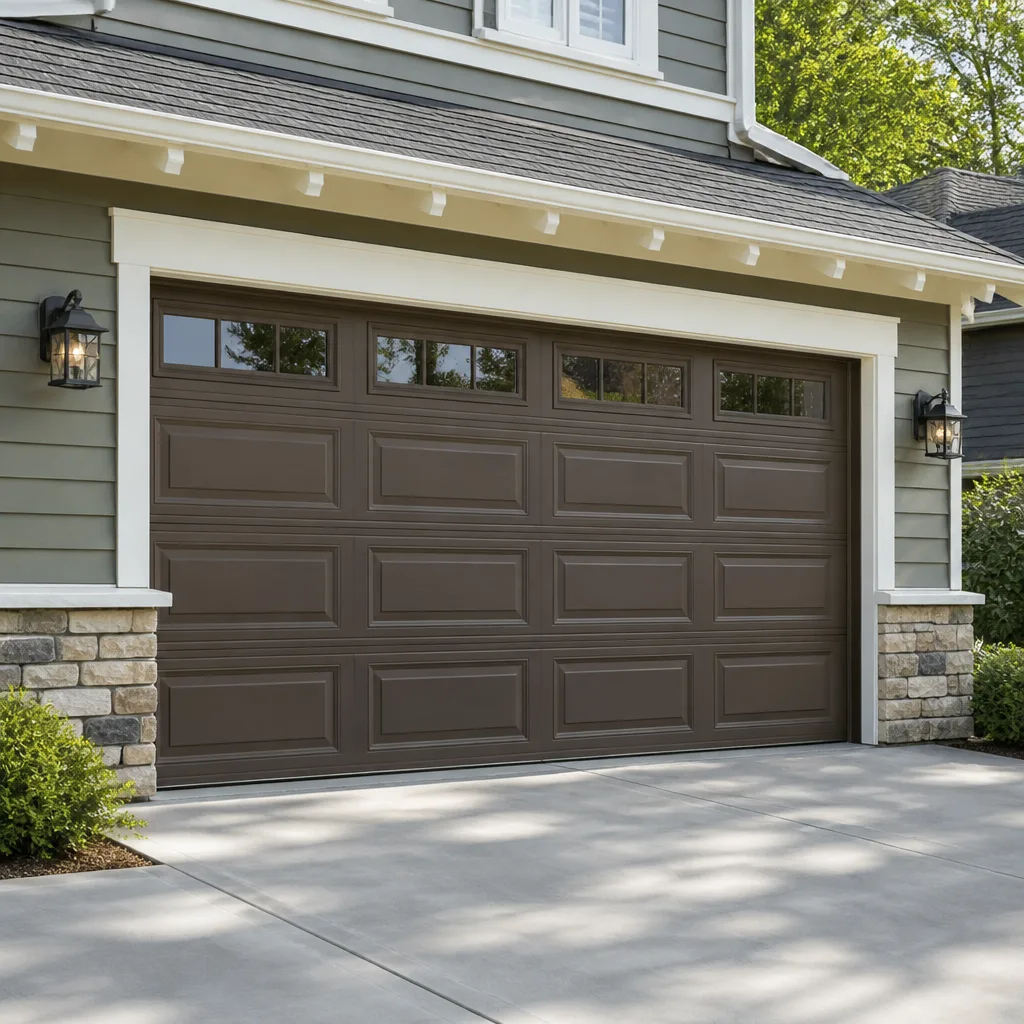 Raised-panel steel
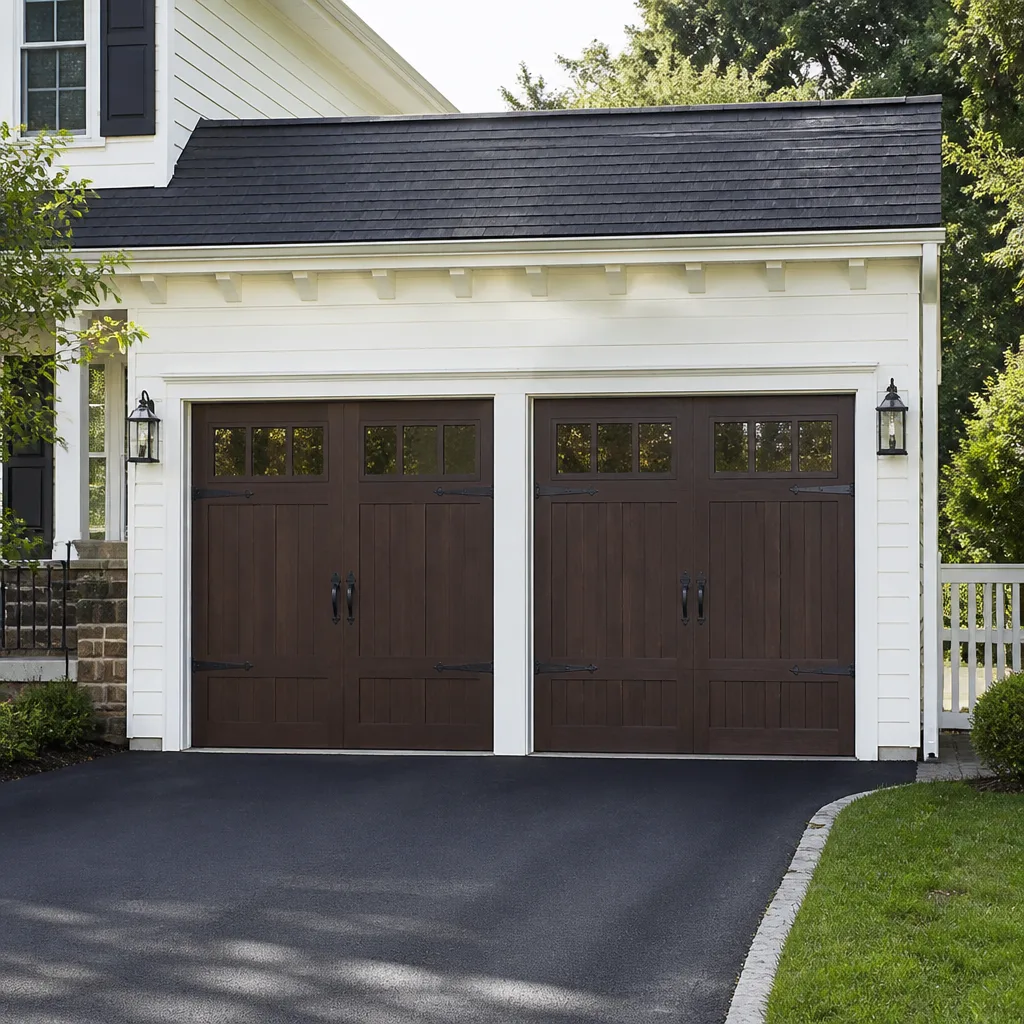 Carriage house
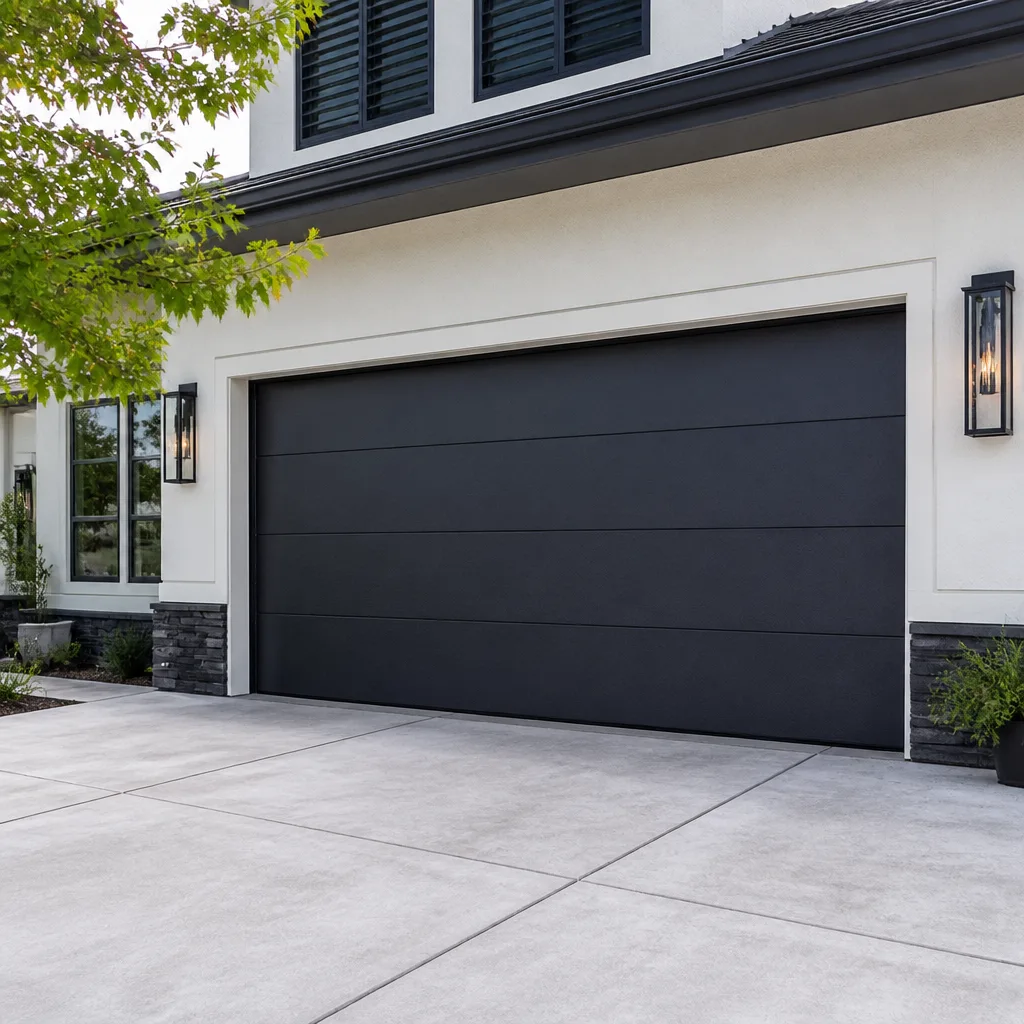 Modern flush
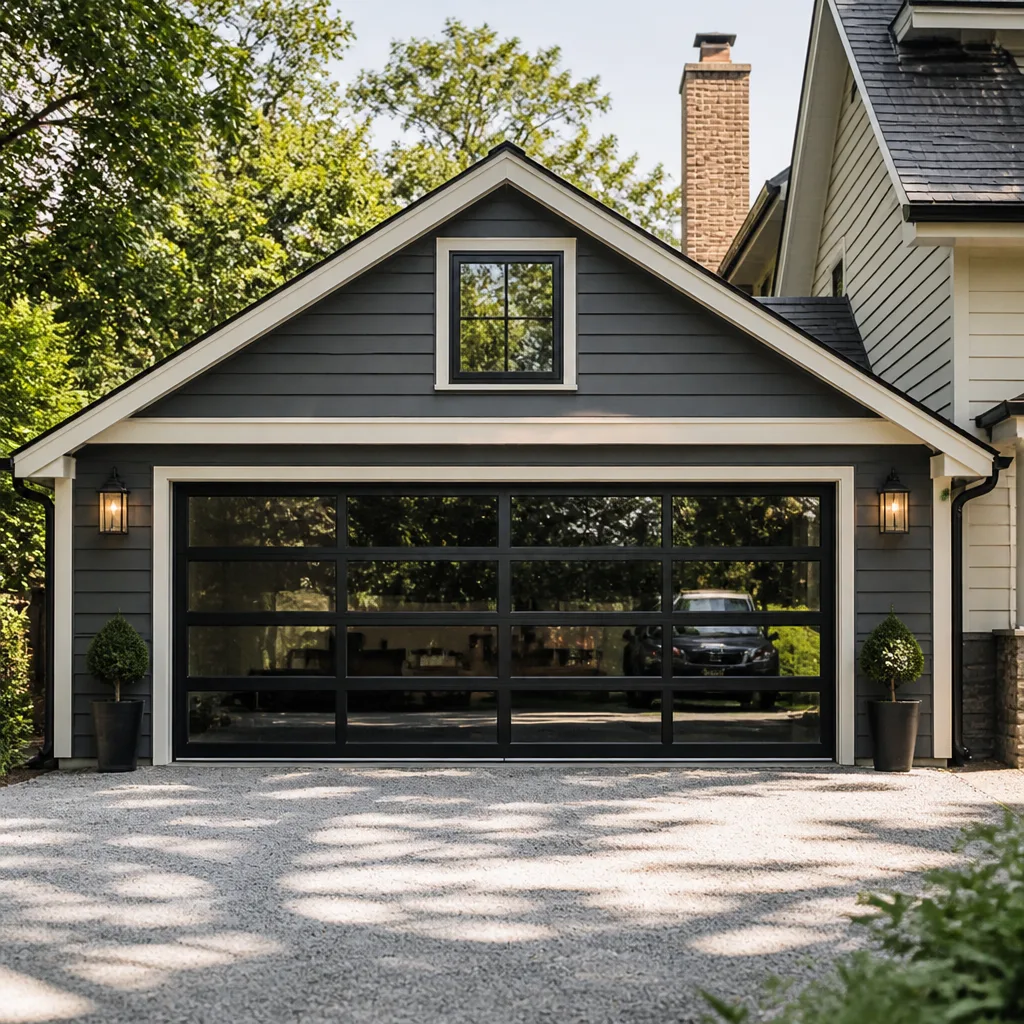 Full-view glass
 LiftMaster openers
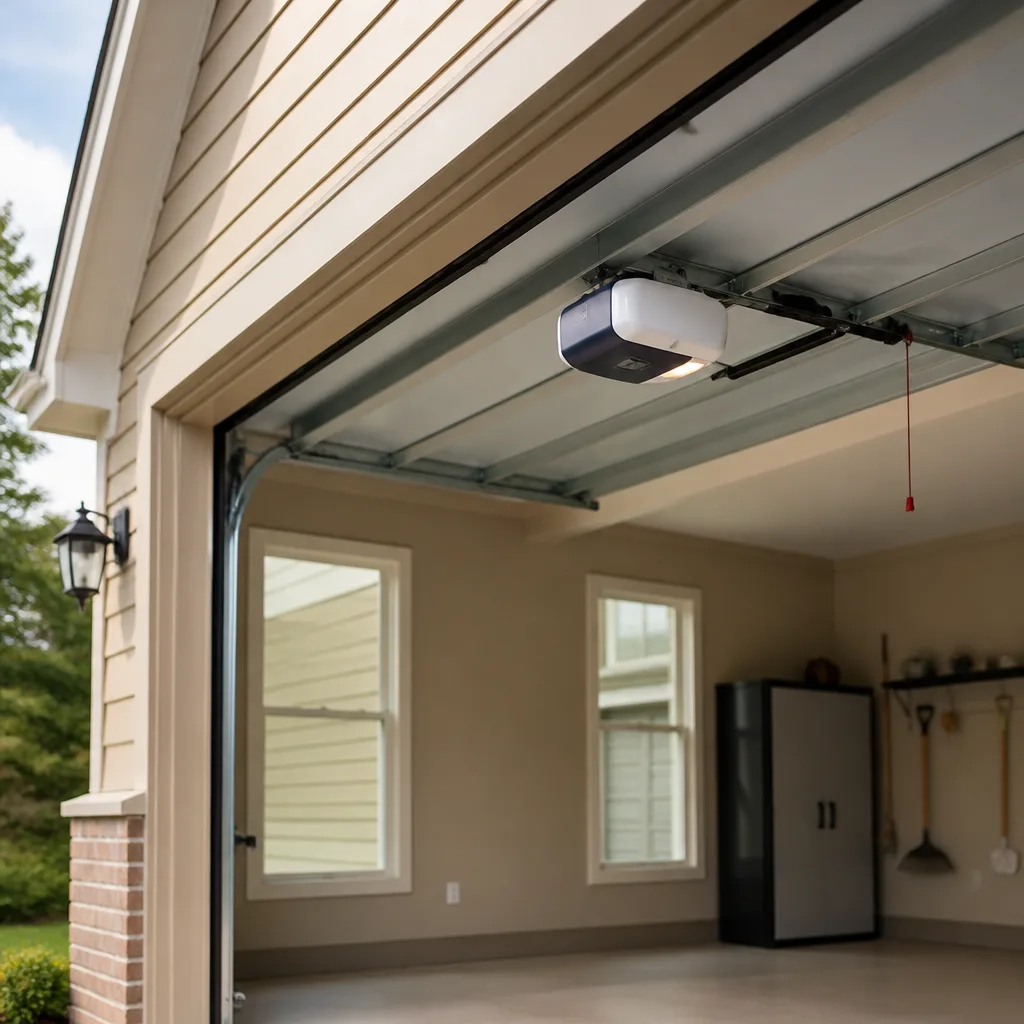 Chamberlain openers
Full 25-point door and opener safety check with every visit - springs, cables, rollers, tracks, and your LiftMaster or Chamberlain opener included
You get a price before we start. It does not change when the pro arrives.
Get your free estimateGarage Door Warning Signs: A Geist Homeowner’s Reference Guide
When a homeowner says “my door is making a noise,” that’s not a diagnostic – it’s a starting point. A grinding noise at the top of travel and a grinding noise mid-cycle point to completely different failing components, and treating them the same wastes time and money. Garage doors communicate failure through specific sounds, movements, and visual patterns, but only if you know the vocabulary. This reference guide decodes what each symptom actually means mechanically, so you can describe the problem accurately and judge urgency before you call anyone. We’ve written it from a garage door specialist’s point of view, here in Geist.
Quick Answer
The most urgent garage door warning signs are a loud bang followed by a door that won’t lift (usually a broken torsion spring), a door that closes crooked with one side hanging low (cable or track trouble), and repeated opener reversal with nothing in the path. Those three mean stop using the door. Grinding, squealing, and the door pausing mid-travel are earlier, cheaper warnings you can act on without shutting everything down. In every case, the symptom tells you which component to look at, and this guide maps each one to the part most likely responsible.
Styles & brands we work with
- Raised-panel steel
- Carriage house
- Modern flush
- Full-view glass
- LiftMaster openers
- Chamberlain openers
Table of Contents
- What Do the Sounds Tell You? Sound-to-Component Mapping
- What Do Movement Symptoms Tell You?
- What Do Springs Look Like When They Fail?
- How Your Opener Behaves as a Diagnostic Tool
- The Two Symptoms Geist Homeowners Ignore Too Long
- Your 60-Second Walkaround: A Numbered Check
- How Brand-Specific Behavior Fits In
- Which Signs Mean Stop Using the Door Today?
What Do the Sounds Tell You? Sound-to-Component Mapping
A garage door is a mechanical system of springs, cables, rollers, hinges, and a track, and each of those parts fails with its own signature sound. Learning four of them is the single highest-value piece of knowledge a homeowner can carry, because it lets you describe the problem in a way that gets a technician to the right diagnosis on the first visit.
- Pop or bang, followed by silence. A torsion spring has snapped. The door may feel alarmingly heavy and the opener may strain and give up. This is a stop-using-the-door situation: the spring is under extreme tension and must not be touched or adjusted without proper tools and training.
- Grinding at the top of travel. The opener’s carriage or the top of the track area is the usual suspect. A worn drive gear in the motor, a binding trolley, or debris in the rail can all grind right as the door reaches the ceiling.
- Grinding through the middle of the cycle. Usually roller or hinge trouble. Nylon rollers flatten and start to drag, steel rollers seize, and hinges dry out. This is mechanical wear, not a spring or cable problem.
- Squealing or squeaking. Metal-on-metal friction, most often dry hinges, a worn roller, or a torsion tube rubbing its bearing plate. Low urgency but worth catching before it accelerates wear.
- Banging or rattling. Loose hinges, a loose bottom bracket, or a door panel that has started to separate from its stiles. Rattling that worsens over weeks is a sign of fasteners working free.
In our experience, the pop is the one homeowners correctly recognize. The other three get lumped together as “a noise,” and that’s exactly the description that loses a day, because no technician can guess which part to bring. Name the sound and where in the travel it happens, and you’re halfway to a diagnosis. When a garage door in Geist starts grinding mid-cycle, we’d rather hear it early than see a seized roller score the track.
What Do Movement Symptoms Tell You?
Movement tells a story as clearly as sound. A door that pauses, reverses, or closes unevenly is revealing a specific mechanical condition, and each one has a different level of urgency.
Pausing mid-travel
A pause in the middle of the run is almost always the opener hitting its force limit before it hits a hard obstruction. That can be a dry or seized roller, a hinge that’s binding, a warped track section, or a torsion spring that’s lost tension and is no longer helping lift the door’s weight. The opener is doing more work than it was engineered for, and it’s telling you so by slowing down.
Reversing unexpectedly
Modern openers, including LiftMaster and Chamberlain units, use an optical safety system near the floor. If a door reverses with nothing in the path, the usual causes are a misaligned sensor lens, sunlight washing out the beam, or a small obstruction like a leaf or a bit of debris. If the reversal happens far above the floor, suspect the force limit instead – a binding door that’s harder to close than the opener expects.
Closing unevenly on one side
This is a tension problem, not an alignment quirk. When one side runs low, the cable on that side has stretched or slipped, or a drum has jumped its seat. A door that closes crooked puts twisting stress on the panels, hinges, and track, and it gets worse quickly. Stop cycling the door and get it looked at.
One local factor worth knowing: Geist humidity and temperature swings make wood and composite panels expand and contract through the year, so a door that grazes one side in July may clear the track entirely in January. Adjustment that ignores the season often comes back within a few weeks. Garage door repair can address all three of these patterns, but the uneven close is the one that shouldn’t wait for a convenient week.
What Do Springs Look Like When They Fail?
Most springs fail in two visible ways. Some snap with a bang. Others fatigue slowly and give no sound at all, which is why a visual check matters as much as a listening check.
A broken torsion spring shows a clean gap where the coil has separated, usually near the end or the middle of the wind. The two halves may still sit close together, so look from below rather than at an angle. If the door still lifts but feels much heavier than usual, the remaining spring is carrying a load it wasn’t sized for, and the opener is doing the rest. One spring is the common domestic arrangement; a matched pair usually gets replaced together, so a pair costs roughly double a single spring – your written estimate will spell out which parts you’re paying for.
A fatigued spring that hasn’t snapped tells a slower story. Its coil winds progressively open, the surface darkens or shows light rust bloom, and people notice the door seeming heavier every few months. That gradual hardening is the actual warning: the spring is losing tension and the opener is compensating. An overworked opener wears out faster, and an opener that fails with a tired spring still on the door is a bigger repair than a spring swap.
Springs hold a dangerous amount of stored energy. That’s why we don’t publish a step-by-step adjustment procedure and why we’d rather you stop and call: spring replacement is the highest-risk job in this trade, and it needs proper winding bars, training, and a controlled process. If you’re in Geist or anywhere on the east side and your door suddenly won’t lift, treat it as a spring until proven otherwise and keep hands off the torsion assembly.
How Your Opener Behaves as a Diagnostic Tool
Your opener is an underappreciated diagnostic asset. Its run time, error codes, and force behavior are the machine’s own report on what’s happening downstream.
Run time
A door should open and close in roughly the same number of seconds it always has. If the cycle has visibly slowed, the motor is working against resistance: a binding roller, a dry hinge, a misaligned track, or a spring that’s lost tension. Faster and jumpier than normal can mean a limit switch has moved or the travel settings are out of sync. Either way, timing changes are the door’s early warning, and most homeowners notice them before anything actually breaks.
Error codes and light patterns
LiftMaster and Chamberlain units blink the main light in a repeating pattern to report a fault, most commonly repeated safety-sensor trips or travel limit problems. Genie and Craftsman openers use their own indicator patterns. Ten seconds spent counting the blinks before a call makes the conversation more useful. A single blink pattern that repeats with no obstruction present usually points at the sensor pair rather than the motor.
Force limit behavior
The force limit is a safety threshold, not a suggestion. When an opener senses unusual resistance, it backs off and reverses. A door that closes two inches and then reverses is the opener refusing to crush something – it may have sensed a real obstruction, or it may be reacting to a binding door that has become harder to push than the limit allows. Resetting the force limit to push through is the wrong move; it disables a safety feature and masks the actual mechanical problem.
Garage door opener repair usually starts with this diagnostic read, and it’s one reason we ask what the opener’s light did and how long the cycle took. If the motor is healthy and the door is binding, fixing the door is the answer. If the motor has failed on a system like a Wayne Dalton or Raynor drive, the same visit can address it.
The Two Symptoms Geist Homeowners Ignore Too Long
Two warning signs account for a large share of the secondary damage we see, and both share a trait: they’re quiet. They don’t bang, pop, or reverse. They just get slowly worse.
Uneven cable tension
Cables run down the sides of the door and wind onto drums above. When tension goes uneven, one side takes more load than the other. The warning signs are subtle: a door that hangs slightly low on one corner at rest, a faint slack feeling or a small kink visible where the cable meets the drum, or a cable that has begun to unravel or fray at the edge. A stretched or miswound cable can jump the drum and put the whole panel under stress. Cables are also under high tension, so this is another inspection, not a hands-on adjustment.
Misaligned track
A track that has been bumped or has shifted with the seasons shows up as a door that grazes the rail on one side or binds at one point in travel. The visible signs are a gap between the roller and the track edge, a bend at the bracket, or a curve that looks slightly off when you sight down the rail from the floor. A misaligned track forces the panels to twist slightly every cycle, wearing rollers and hinges and eventually cracking a panel seam.
In our experience across Geist, both problems hide behind a busy schedule because the door still works. The track in a garage takes real impact from being used as a storage corridor, and a bumper tap from a bike or a lawnmower is the usual first nudge. Catching either one early is a small adjustment. Catching it late is a panel replacement and, potentially, a new bottom section. From opener to overhead panel, these are the two checks most deserving of a routine glance.
Your 60-Second Walkaround: A Numbered Check
A short, repeatable check from the floor catches most warning signs before they turn into secondary damage. Do this every few months and before any long trip away. It’s inspection only: if something looks wrong, stop and call.
- Start with the door closed. Look at both springs on the torsion tube above the door. Any clean gap in the coil means a broken spring: stop here.
- Look at the cables on both sides. Cables should look taut, straight, and unkinked where they meet the drum. Fraying, loose wire, or a kink is a call-us sign, not a fix-it sign.
- Sight down each vertical track. The roller edge should sit evenly in the rail. A visible bend or a gap on one side means the track has shifted.
- Test the balance. With the door about halfway up, disconnect the opener using the manual release. A balanced door should hold roughly where you leave it, not crash down. If it drops, the springs are tired. Never release a door while it’s fully open.
- Check the sensors. The two lights near the floor should both be on and steady. Clean the lenses with a soft cloth; a dusty sensor is the most common false reversal in Geist, where garages see plenty of summer dust and pollen.
- Listen and time one full cycle. Note whether the movement is smooth, whether the door pauses, and whether any grinding or squealing appears. Compare the timing to what you remember: a slowing cycle is your cue to book garage door opener repair before something wears out under strain.
- Walk the perimeter for loose hardware. Give hinges and the bottom bracket a quick glance for missing screws or rattling panels. Touching them is fine; adjusting the cable, spring, or torsion assembly is not.
That’s a minute of your time, twice a year, and it covers the majority of the warning signs in this guide.
How Brand-Specific Behavior Fits In
Different systems fail in slightly different ways, and knowing yours helps the diagnosis go faster. Amarr and Raynor doors share much of their hardware and track design with the rest of the market, so their symptoms line up with the general patterns above. Wayne Dalton doors are a common fit on two-car garages, and their lighter panel construction means misaligned track and loose hinges show up early if the door is bumped. Craftsman openers have their own indicator-light patterns and manual-release arrangements.
We work on LiftMaster, Chamberlain, Genie, Clopay, Amarr, Wayne Dalton, Craftsman, and Raynor systems, and parts are on hand so the diagnosis and most repairs land in the same visit. If your opener is a LiftMaster or a Chamberlain, the count of the blink pattern is the fastest thing you can hand a technician. If it’s a Raynor or a Clopay door with a Wayne Dalton-style torsion tube, tell us what you heard and where in the travel you heard it. That combination – brand plus symptom – is the shortest path to a same-day fix.
Which Signs Mean Stop Using the Door Today?
Most warning signs give you a reasonable window to get the door looked at. A small number don’t, and running the door through them risks injury and bigger repair bills.
- The loud pop followed by a door that won’t lift. Broken spring. Keep the door down and keep hands off the torsion assembly.
- A cable that has snapped or is visibly fraying. Cable tension is what holds the door on its path; a frayed cable can let go completely.
- The door closing crooked on one side. Twisting stress damages panels and hinges quickly.
- A door that has come off one of its tracks. Any attempt to force it back on can drop the door on whatever is beneath it.
- Any grinding or hesitation paired with an opener that has already struggled. Stop cycling it and book a same-day visit. We answer 24/7. Fast dispatch from 7am to 7pm, Sunday through Friday, and a call outside dispatch hours is booked into the next opening.
When in doubt, leave the door in the position it’s in and call. A door that stays still is a door that isn’t quietly damaging itself.
Common Mistakes to Avoid
- Resetting the force limit to push through resistance. This disables a safety feature and lets the opener strain against a binding door. Fix the door and the limit resets itself.
- Treating every noise as the same noise. A grind at the top of travel and a grind mid-cycle point to entirely different parts. Describing the sound and its location is worth more than deciding the door “sounds bad.”
- Ignoring a door that hangs slightly low on one corner. It’s the quiet cousin of a cable failure, and it’s cheap to correct early. In Geist, the seasonal temperature swings can hide the problem in spring and reveal it in late summer.
- Oiling rollers on a sliding-garage track without checking whether they’re sealed nylon. Nylon rollers don’t take oil, and lubricant attracts grit that accelerates wear. Ask before applying anything to the tracking system.
- Assuming a blinking opener light is a motor failure. Repeating blink patterns most often point to the safety sensors or the travel limits. Counting the blinks saves a technician a step.
- Forcing a door back onto a track. A door that has jumped its track is heavy and unpredictable. That’s a trained-professional situation.
- Skipping the twice-a-year walkaround because the door “still works.” The two symptoms most often ignored – uneven cable tension and a misaligned track – don’t announce themselves, and they’re precisely what a short walkaround catches.
See the difference
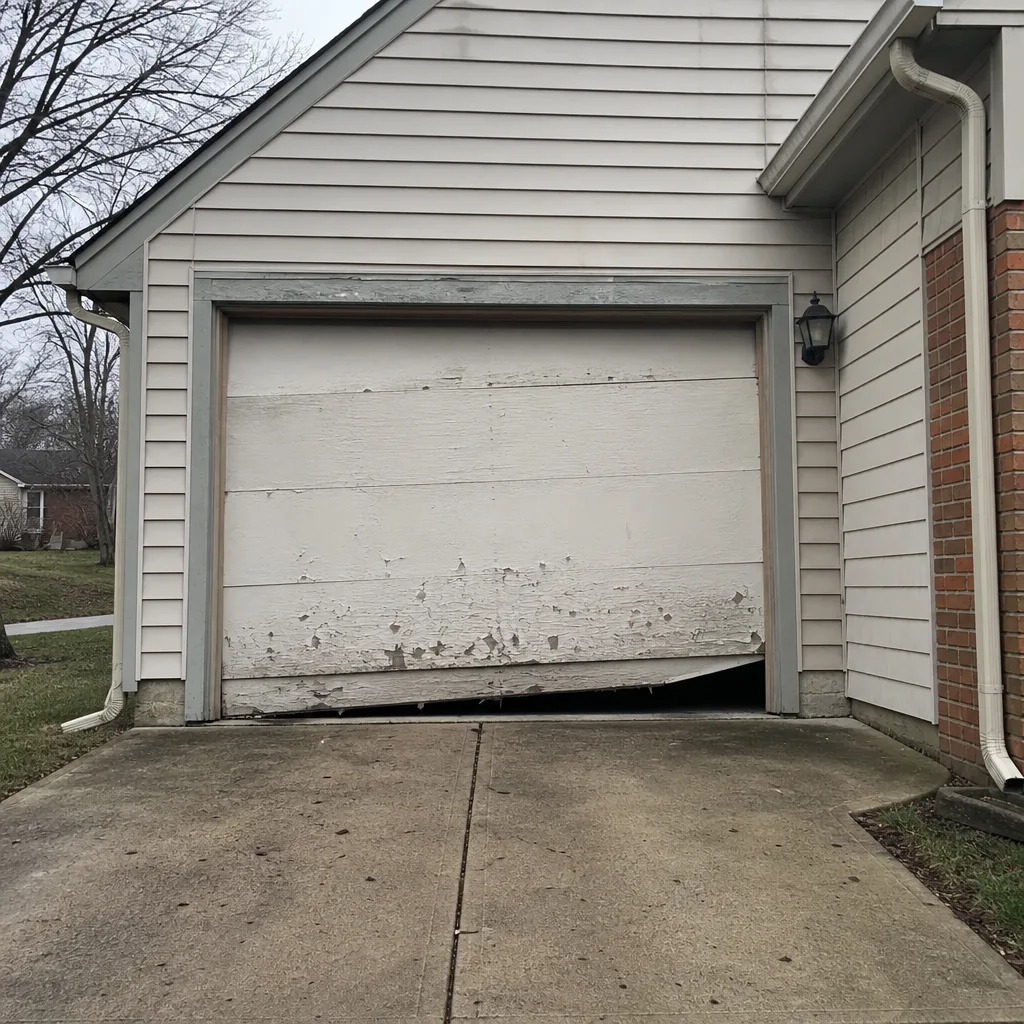 Before
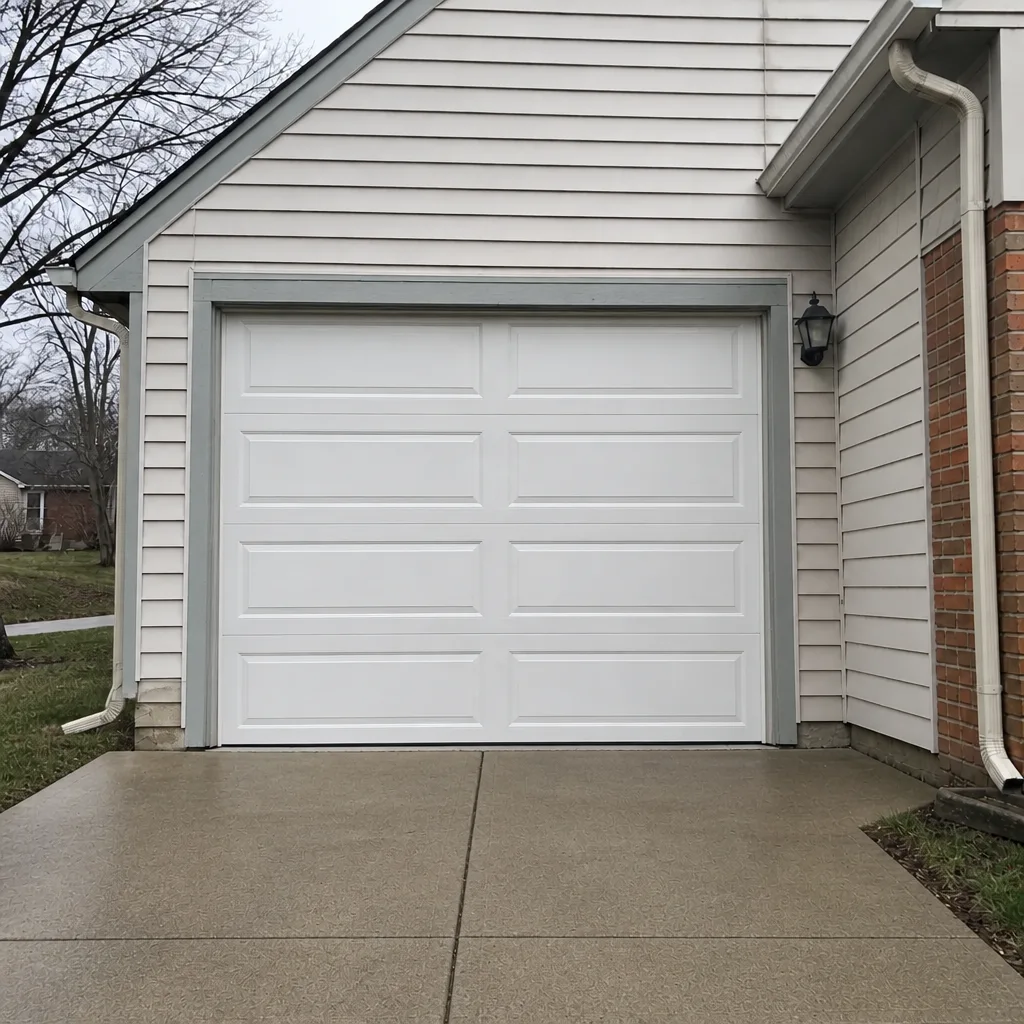 After
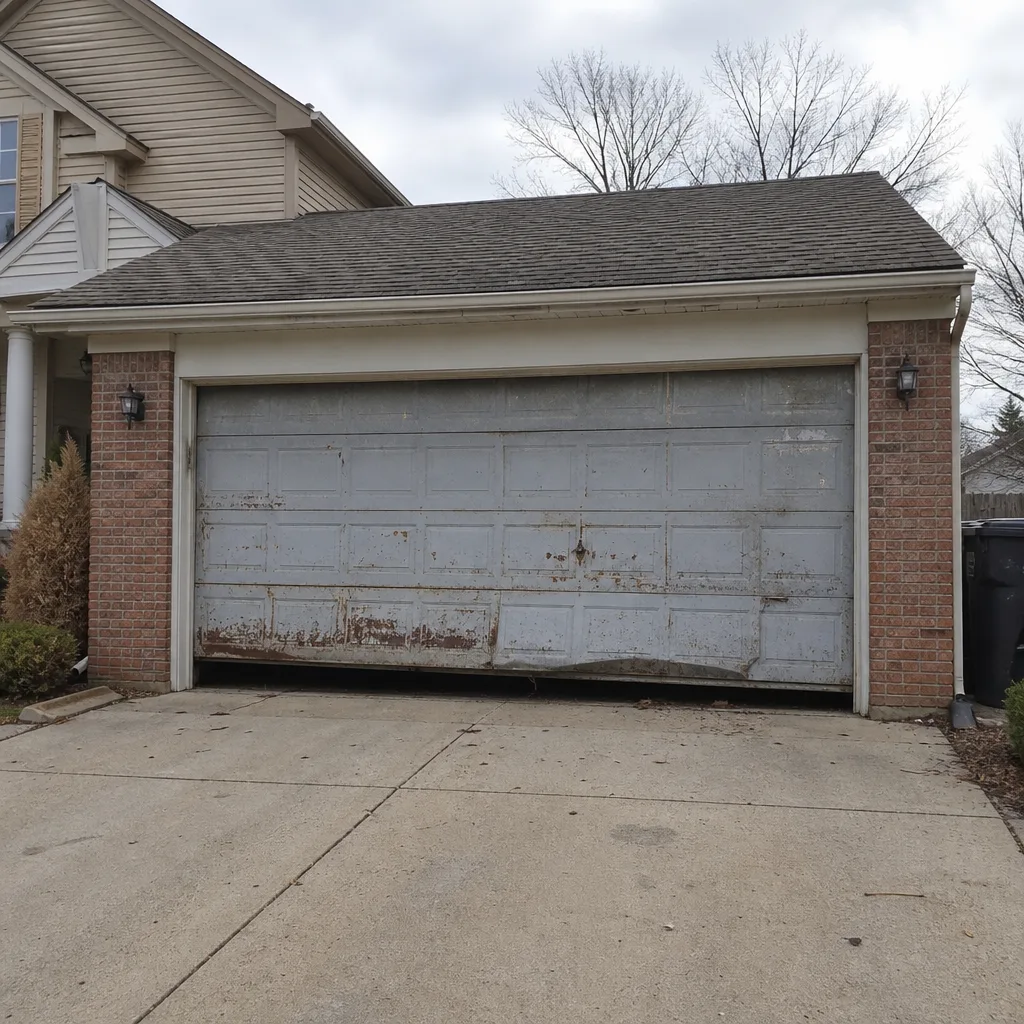 Before
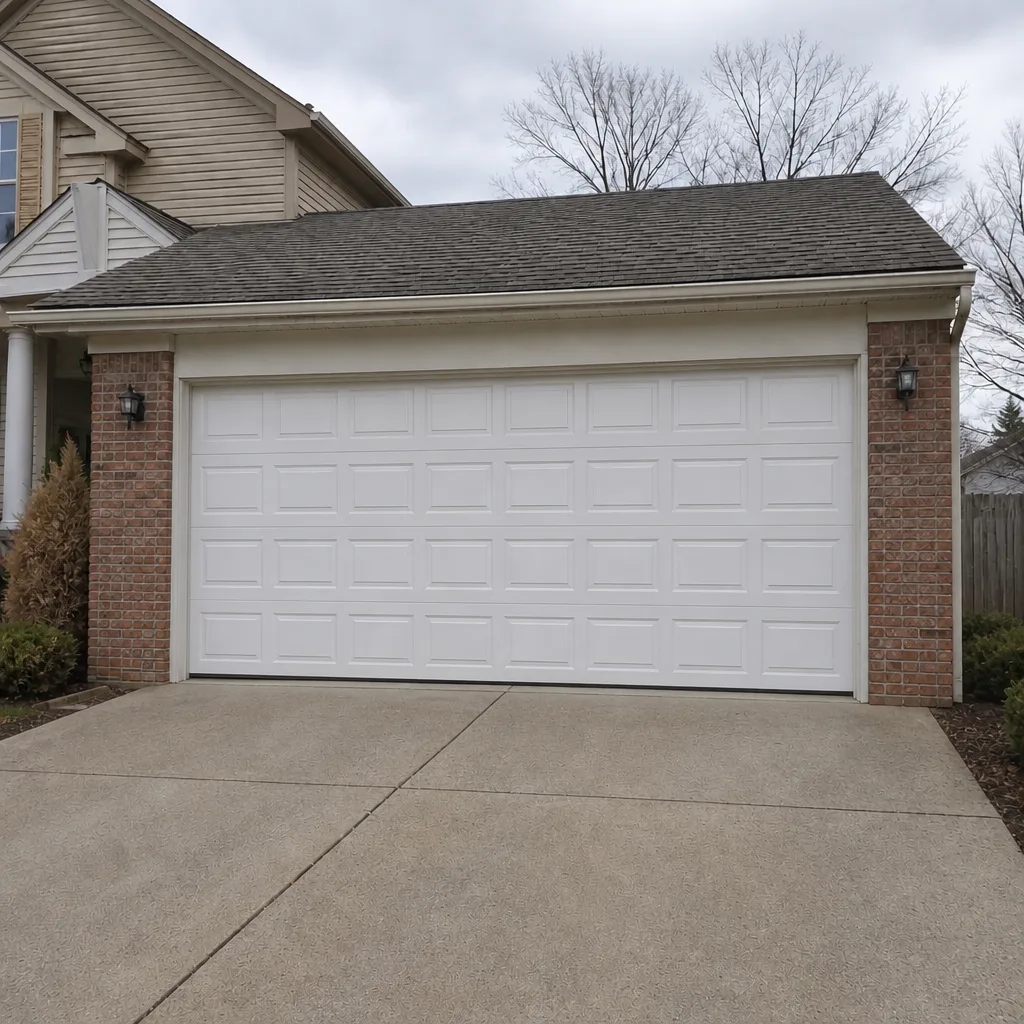 After
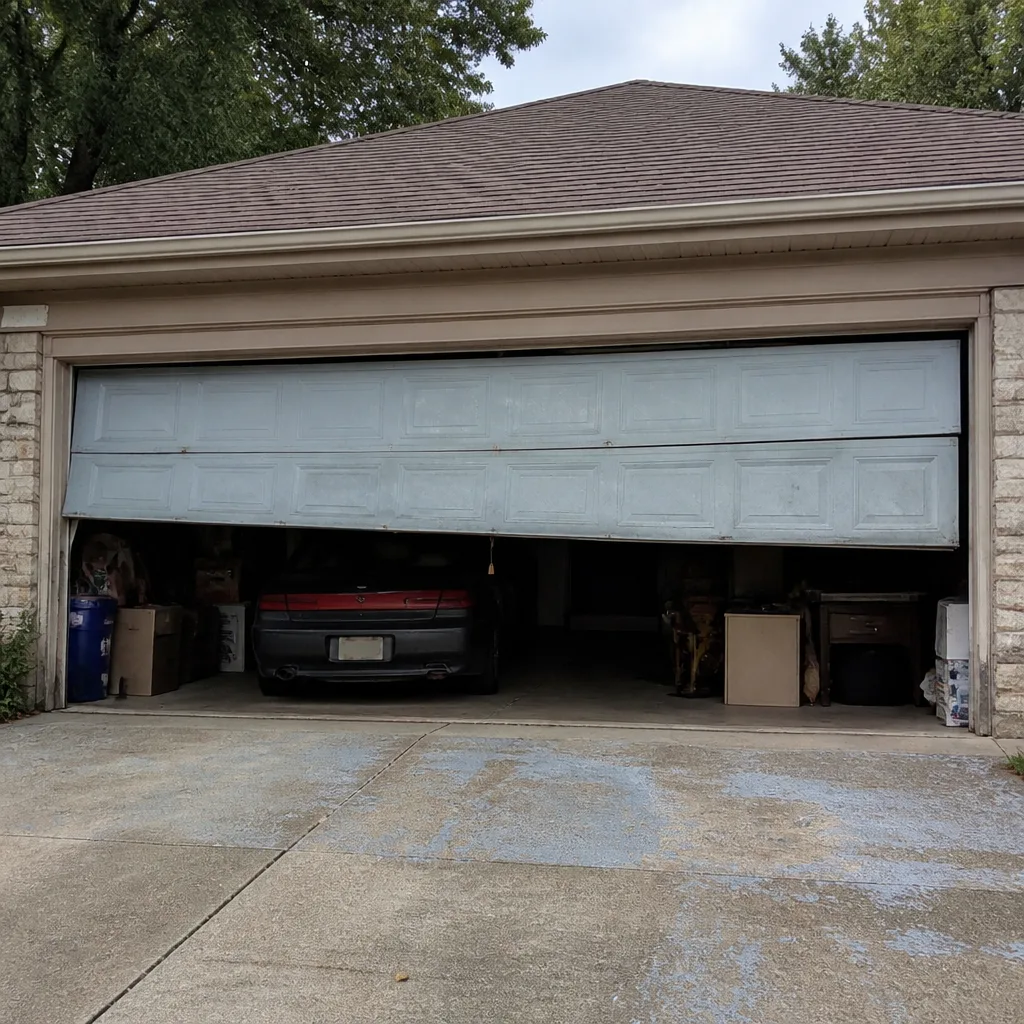 Before
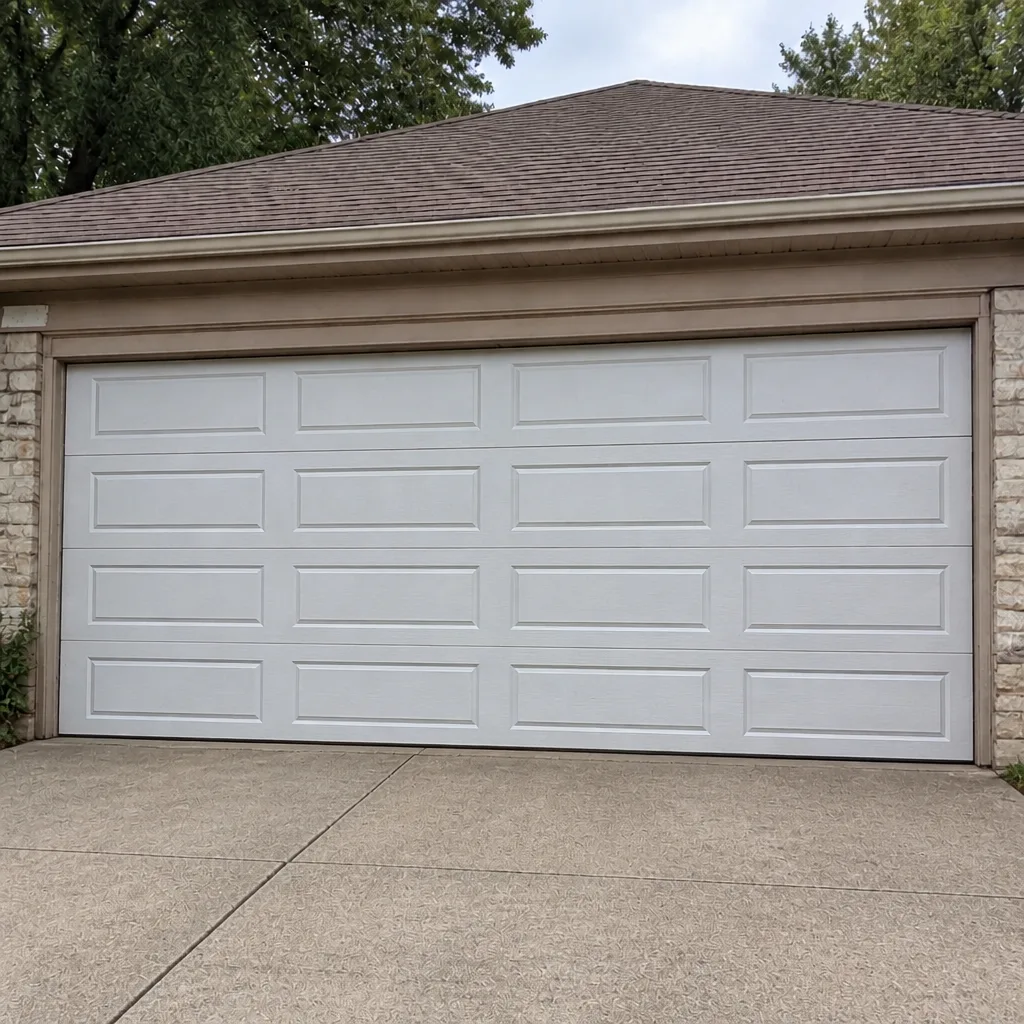 After
When to Call a Professional
Call a professional when the symptom involves a spring, a cable, a track that has shifted, or a door that has come off its path. Those four areas carry stored energy and real injury risk, and none of them is a do-it-yourself adjustment. Call sooner if you’ve heard a pop, if the door closes crooked, or if the opener reverses with nothing in the way. The everyday symptoms – squealing hinges, a dry roller, a dusty sensor – are usually a routine repair you can schedule without urgency. If you’d rather describe it than diagnose it, that works too. Garage Door Repair Geist offers free estimates in Geist and can tell you what the symptom points to and how soon it needs attention. Call (855) 846-4618. We answer 24/7. Fast dispatch from 7am to 7pm, Sunday through Friday.
Frequently Asked Questions
The earliest signs are usually sound and timing: a new squeal or grind during the cycle, a door that takes noticeably longer to open, or a slight uneven hang at one corner. Most of these appear weeks before anything actually fails, which is why a twice-a-year walkaround catches them cheaply. Call (855) 846-4618 for an exact assessment – estimates are free.
A loud pop generally means a torsion spring has snapped, and the door should not be used until it’s replaced. The spring is under high tension, so don’t try to adjust it yourself. Call (855) 846-4618 to book a spring replacement – estimates are free.
If the door reverses near the floor, it’s most often the safety sensors; if it reverses far above the floor, the likely cause is a binding door that has made closing harder than the opener’s force limit allows. Check for a dirty or misaligned sensor lens first, and call if it persists. We answer 24/7. Fast dispatch from 7am to 7pm, Sunday through Friday.
Many spring repairs fall in a typical range that a written estimate will confirm before work begins, and the final figure depends on the door’s size and the spring configuration. Call (855) 846-4618 for an exact quote – estimates are free, and the price is agreed before any work starts.
Often yes, but it needs a professional: a door off its track is heavy and can drop unpredictably during any attempt to force it back on. Keep it in place and call. We answer 24/7, and dispatch runs from 7am to 7pm, Sunday through Friday.
No, but it helps, and the blink pattern and model are the handiest details to pass along. We service LiftMaster, Chamberlain, Genie, Clopay, Amarr, Wayne Dalton, Craftsman, and Raynor systems, so the brand names the tech and the parts. Garage door installation and repair are both handled directly when the time comes.
The Bottom Line
A garage door’s warning signs are specific, and they’re readable. A pop means a spring has gone, a grind at the top points at the opener carriage, a grind mid-cycle points at rollers and hinges, and a crooked close means the cable or track needs attention now. The two you’re most likely to overlook is uneven cable tension and a misaligned track, and those are the ones a quick walkaround catches. Read your door’s sounds, movements, and springs with this reference, and you’ll describe the problem accurately, know what’s urgent, and avoid the kind of secondary damage that turns a small fix into a panel replacement. For everything from spring repair to a new door, we cover your door and only your door in Geist. For a free estimate on any of it, call (855) 846-4618.
Written by the team at Garage Door Repair Geist.